Carmen Goldthwaite is inviting you to a scheduled Zoom meeting.
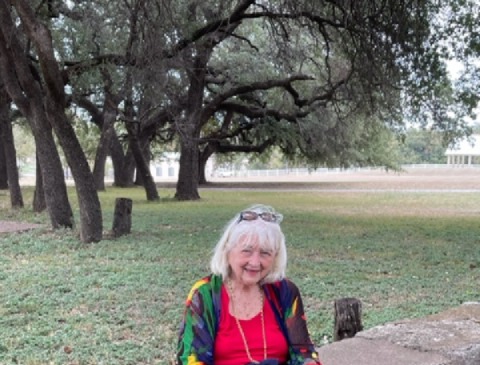
CARMEN GOLDTHWAITE – AUTHOR, TEACHER, STORYTELLER – on the grounds of TCU’s original campus at Thorp Spring,Tex. then known as AddRan College. Her roots stretch back to a great great grandmother that insisted the school be for “Girls, too.” and a school of faith.
Curiosity
“Why? How?” 2 favorite words of writers.
We write about what curiosity brings through its unveiling or discovery as we recall an earlier time or place or situation. And so we write. We also observe “what’s going on” and “where and when are we” and research. And we Imagine something NEW?!
We write about what curiosity brings through its unveiling or discovery. When that occurs, writers often laugh, maybe weep with joy, joy at weaving together our 26 letters into something special: OUR STORY.
Discovery
And then there’s the all important “discovery” of something new. I love that instance when an insight, a new “putting it together” waltzes in creating that feeling, “where did that come from?” It brings forth the music of the story, the “I’m not quitting until I get this story nailed” attitude. Discovery, curiosity, prime fuels for writing are followed closely by keen observations seeking fine details that define a person or place or situation.
We write about what curiosity brings through unveiling or discovery as we recall an earlier time or place or situation. And so we write. We also observe “what’s going on” and “where and when are we” and research. And we Imagine something NEW?!
Listen
Workshops & Writers’ Circles Focus on Listening
A “keeper” of a writerly asset is listening. How do the people of your story (fact or fiction) speak? The language? Vocabulary? Voice inflections? (Yes, words and sentence structures go into that.) Listen and learn.
It’s how we learn, how we improve and how we hone our writing skills. We practice these guiding principles learned in a life of teaching and as a hospital chaplain. Listening includes watching, observing as well.
Practice
Wherever I teach, I encourage participants to follow the following. It encourages folks to “hear” what is being said rather than shape their arguments against it. (Learned this in “teacher training” and as a hospital chaplain.)
“Don’t be afraid of the quiet.”
And that’s particularly true if you’re interviewing someone. We’ll address this tool as well: ask a question. Wait, Watch listen for the answer, including what the person says in body motion and facial expressions.
- Offer praise first to a writer, then suggest how they might improve or share where you “got lost” in the story.
- Be respectful. Writers are bringing forth “a piece” of themselves, a dream. Something important. Let that something claim a role in the learning process. We’re on a soul journey in writing classes (My Writers’ Circles and workshops).
NEXT WRITERS CIRCLE DATES: 2026
for Six-Week Sessions…
- October 20, 7 pm on Tuesdays at my Fort Worth home
- Wednesdays, October 21, 1:30 – 4:30 pm, a “hybrid” – some online, some in person
- November 12, THURSDAYS 7pm / all Zoom.
NEXT WORKSHOP IN NOVEMBER (dates tbd)…
“How do your characters talk?“
Real or Fictional? Do they speak differently so reader recognizes who’s talking without a ton of directions. We want to keep the action moving, tension growing. DIALOGUE IS A GREAT WAY TO DO THAT. So, let’s not clutter it up. Make it count.
More to come. Another Saturday workshop including dates. Watch here. subscribe to my free newsletter, a monthly issue.
Dear Reader,
Meet THE TRIPLETS. They’re appearing on the Home Page, Teachers’ Page and now here where we can share comments, ideas, etc.
Q. But why?
A. Often, writers can get so intense about saying something just right that their style slips away, their writing becomes more formal and…what we call “wooden.” It’s hoped that a glance at one of the cartoons will provide a lighter touch, shoo away that zeal for perfection that blocks fluid writing, ideas and may prevent a useful discovery. I’ll use any trick I know to help with that, i.e., “THE TRIPLETS.”
Writers’ Circles + Workshops
Premise Polly’s the Beginning. She welcomes you aboard “the good ship Story” by showing ways to get started with your story, its organization, premise/theme, main character and plot.


Plotting Penny – the Middle. I call her my “scruffy sailor.” Your story takes shape with her in this big middle, getting across points about plot such as suspense and surprise and necessary “other” characters, actions and more.
Publishing Paula, The End, suggests ways to tie up this story – its plot and characters and setting for a “satisfactory” ending. She also may harp on “good writing” so that your story comes forth with rhythm, not clunks.
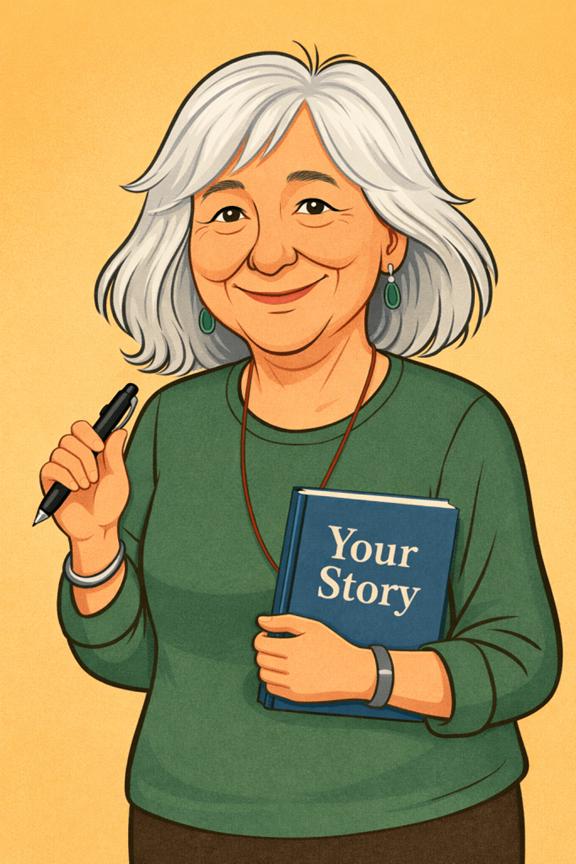
So, on this “It’s Personal” page, I’ll introduce you to my thoughts, feelings, background, family and pooch and other activities in case there’s a budding writer out there or maybe an ‘ol pro’ needing some juice. It’s my belief that others’ writings can jiggle loose the rust. And sometimes, like now, I can’t resist dropping in a writerly tip or two.